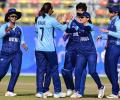
Arunachal Pradesh Sports and Youth Affairs Minister Kento Jini announced the state's ambition to become the leading sporting state in the Northeast, highlighting its current second-place ranking after Manipur and the participation of two athletes in the upcoming Asian Games. The state celebrated National Sports Day by felicitating over 102 athletes and coaches with Rs 50 lakh in incentives, while officials and a renowned mountaineer encouraged continued sports participation.

In 100 days in office, Chief Minister V D Satheesan has ordered five SITs. This would appear to be some kind of a record, points out Aditi Phadnis.

An Indian pilot and several passengers are being hailed as heroes after thwarting a co-pilot's alleged attempt to crash a flydubai flight en route to Tel Aviv. The incident involved a mid-air struggle, a rapid descent, and an emergency landing in Saudi Arabia, with international leaders praising the bravery that saved 174 lives.

India has stated its commitment to protecting its economic interests and ensuring energy security after the US House of Representatives passed a bill allowing the US President to impose tariffs of up to 100 per cent on countries, including India and China, for purchasing Russian crude oil. The Ministry of External Affairs affirmed India's resolve to maintain diversified energy sourcing and has articulated its concerns to US interlocutors regarding the bill's potential implications.

India has condemned an attack on a Panama-flagged oil tanker off the coast of Oman, which resulted in one Indian seafarer going missing and 13 others being rescued. The Ministry of External Affairs is closely monitoring the situation and coordinating with Omani authorities for search and rescue operations, while also reiterating calls for de-escalation and safe navigation in the region.

Prime Minister Narendra Modi cautioned against the 'weaponisation' of technology and critical minerals at the BRICS summit, advocating for cooperation to foster shared prosperity. Concurrently, Chinese President Xi Jinping announced plans for an open-source AI ecosystem for BRICS nations, positioning Beijing as a key technology partner amid global AI competition.
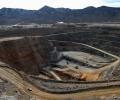
Union Mines Minister G Kishan Reddy announced that the Indian government is intensifying its support for private mining entrepreneurs seeking critical mineral opportunities abroad, working with the Ministry of External Affairs and appointing mineral officers in embassies to facilitate these efforts.

Sanjukta Parashar, an IPS officer with a formidable background in counter-insurgency, has made history by becoming the first woman inspector general of the CRPF's elite CoBRA force.

India's Ministry of External Affairs reported that 320 Indians are missing and 400 are stranded on the Chinese side following devastating flash floods along the Nepal-Tibet border. India is actively involved in rescue efforts, sending relief supplies to Nepal and coordinating with Chinese authorities for the evacuation of its citizens. External Affairs Minister S Jaishankar reviewed the situation, emphasising the priority given to the well-being of Indian nationals.

Climate activist Sonam Wangchuk has demanded the resignation of Union Home Minister Amit Shah, holding him responsible for the deaths of four people during protests in Leh last year. Speaking on the first anniversary of the violence, Wangchuk expressed fear for his life, alleging threats, and called for the judicial inquiry report into the incident to be made public. He criticised the use of automatic weapons against protesters and questioned the branding of local youth as "anti-national," linking the violence to unfulfilled promises regarding Ladakh's constitutional safeguards.

The parents of IIT Bombay student Sahil Wakode, who allegedly died by suicide, have begun a hunger strike demanding action against those they accuse of tormenting their son due to caste discrimination. The institute has deferred mid-semester examinations and reissued an apology for an earlier statement regarding the circumstances of his death.

Indian and Chinese armies held their first high-level commanders' flag talks in the Arunachal Pradesh sector, following Special Representatives dialogue. These talks, aimed at maintaining peace along the Line of Actual Control, occurred amidst reports of aggressive military posturing and just days before Chinese President Xi Jinping's visit to India for the BRICS summit.

Manchester City has reportedly been found guilty of 114 out of 115 alleged breaches of Premier League financial rules, a development that could have significant repercussions for English football. The club denies wrongdoing and plans to appeal, stating the process is ongoing and confidential. This ruling follows a lengthy investigation and raises questions about financial regulation and competitive integrity in the league.

The Union Home Ministry has issued a stern advisory to states and Union Territories, highlighting a "dangerous trend" of human trafficking through "overseas recruitment scams." These scams lure victims with promises of high-paying jobs abroad, only to trap them in "CyberFraud Centres." The ministry has called for a "specialised offensive" involving various state agencies to combat this growing menace, emphasising strict enforcement, agency verification, and public awareness.

'Xi is conveying that China is a pre-eminent power, and India should modulate its actions or approaches accordingly.'
India's proposal to link BRICS payment systems, including central-bank digital currencies (CBDCs), was notably absent from the grouping's New Delhi Declaration, despite being a key agenda item for India's chairmanship. This omission leaves the 16-year effort for trade in local currencies without a settled payment architecture, with the declaration only 'acknowledging' the work of the BRICS Payment Task Force.

Football administrator Ranjit Bajaj has filed a writ petition in court, seeking directions for the All India Football Federation (AIFF) to immediately schedule and complete elections for its Executive Committee. Bajaj argues that the AIFF has already adopted a compliant constitution, making further deferment unjustified.

Top Meta India executives, including chief Arun Srinivas, appeared before the National Commission for Protection of Child Rights (NCPCR) for the second time in a week regarding alleged Child Sexual Exploitative and Abuse Material (CSEAM) related advertisements on its platforms. Meta has committed to reporting child safety matters directly to India's I4C cybercrime portal, a significant shift from its previous practice of reporting to a US-based centre. The government is pushing for stronger safeguards and accountability from social media platforms to ensure online child safety.

India has once again raised alarms over the escalation in the security situation in the Red Sea area and strongly condemned Houthi strikes targeting Saudi Arabian territory, "including on civilians and economic assets."

Prime Minister Narendra Modi, in bilateral talks with Chinese President Xi Jinping, emphasized that both nations must show sensitivity to each other's core issues and be guided by mutual respect, sensitivity, and interest. Modi highlighted the critical importance of peace and tranquillity along the Line of Actual Control for the development of India-China relations, while also addressing concerns regarding Taiwan and Tibet.

Tavengwa Mukuhlani, Chairman of Zimbabwe Cricket, has been appointed as the new Deputy Chairperson of the International Cricket Council (ICC) until November 2027, succeeding Singapore's Imran Khwaja. This significant appointment is expected to bolster African cricket, especially as Zimbabwe prepares to co-host the 2027 ICC Men's Cricket World Cup.

India is hosting the 18th BRICS Summit in New Delhi, bringing together numerous world leaders including presidents from China, Russia, South Africa, Iran, and Egypt, along with prime ministers and foreign ministers from other nations. The summit will feature bilateral talks and highlights the expanded BRICS grouping's growing global influence and India's significant role as a founding member and current chair.

The Sports Ministry has granted an exemption to the Indian Olympic Association (IOA), allowing it to maintain a 16-member Executive Council. This decision aligns with the International Olympic Committee's (IOC) recommendation, overriding the National Sports Governance Act's usual limit of 15 members, to ensure compliance with international statutes ahead of upcoming IOA elections.

India's Consumer Affairs Secretary Nidhi Khare announced that cab aggregators have been ordered to cease advance tipping options, deeming the practice misleading and unfair. This follows the Central Consumer Protection Authority (CCPA) imposing a Rs 10 lakh penalty on Rapido for unfair business practices, including advance tipping and "dark patterns" that pressure users to pay more. Investigations into Uber and Ola are ongoing, with the government emphasizing that tipping should be voluntary and post-ride.

Bangladesh has confirmed that Prime Minister Tarique Rahman will not attend the upcoming BRICS Summit in India, clarifying that the invitation was extended to him as the BIMSTEC Chair, not as Bangladesh's Prime Minister. The nation is prioritising bilateral visits and discussions, while also addressing national interests like the expiring Ganges Water Sharing Treaty.

IIT Bombay has established a 10-member high-level committee to investigate the alleged suicide of B Tech student Sahil Wakode, who was found dead after being caught using a mobile phone during an exam. Faculty member Suryanarayan Doolla, named in an FIR alleging abetment to suicide on grounds of caste discrimination, has been sent on leave.

The BRICS summit in New Delhi brings together leaders from major emerging economies to address global challenges like trade disputes, geopolitical upheavals, and the economic impact of conflicts in Ukraine and West Asia. India, as chair, aims to position BRICS as an economic growth engine, focusing on the Global South's food, energy, and supply chain security. The summit also highlights the grouping's expansion and its growing influence in global governance.

BJP president Nitin Nabin has announced new in-charges for party affairs in Uttar Pradesh, Punjab, and Gujarat, with Vinod Tawde, Satish Poonia, and Tarun Chugh taking on key roles respectively. These appointments are effective immediately.

Court said state machinery prevented woman from challenging Foreigners Tribunal order; directs authorities to try to locate her in Bangladesh and bring her back to India.

The Congress party has demanded the resignation of Chief Election Commissioner Gyanesh Kumar, alleging "vote chori" and treason, following a media report revealing that two other Election Commissioners had formally objected to decisions regarding the Special Intensive Revision of electoral rolls. Rahul Gandhi and Mallikarjun Kharge have accused the BJP, RSS, and EC of undermining democracy, citing concerns over voter list tampering and lack of transparency.

External Affairs Minister S Jaishankar visited Kyiv, reiterating India's readiness to assist in ending the Ukraine-Russia war. He emphasised that solutions would not emerge from the battlefield and highlighted Prime Minister Modi's call for an end to the conflict. Discussions also covered humanitarian aid, the impact on commercial shipping, and bilateral trade, with Jaishankar inviting his Ukrainian counterpart to India for further talks.
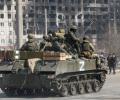
An Indian woman has alleged that Russian police detained her husband in Moscow and pressured him to join the Russian army. The Indian Embassy has sought consular access, while India continues efforts to secure the return of its nationals recruited into Russian forces.

The US House of Representatives has advanced a bill that would empower President Donald Trump to impose 100 per cent tariffs on countries, including India, that purchase oil and gas from Russia, and also extend sanctions on Iran. The legislation, which previously passed the Senate, aims to curb Russia's energy revenue amidst the Ukraine conflict.

Xi brought in asymmetrical power play by stating that India should have 'strategic cognition' and 'strategic judgement made on the basis of the stage of development the two countries are at'. This is a very nuanced way of asserting China's coercive diplomatic posture and reflects Beijing's penchant to unleash border instability at will, restrict rare earth metal exports, exert pressure on India at global and regional orders, asserts China expert Srikanth Kondapalli.

As many as 274 fugitives have been repatriated from 36 countries in the last 7 years, an average of around 40 per year and a 10-fold jump from the 2004-13 period when around four fugitives were brought back every year, the government said on Tuesday.

Tamil Nadu Chief Minister C Joseph Vijay is set to chair a crucial TVK alliance coordination meeting in Chennai. The meeting aims to formalise the ruling coalition's structure, common minimum programme, and joint steering committee. However, the absence of key Left allies and a public rift between TVK and Congress over national leadership aspirations threaten to destabilise the alliance, highlighting a significant test for CM Vijay's political management.

Delhi Police have arrested three men from Punjab for allegedly painting pro-Khalistan and anti-BRICS slogans near the Singhu border. The arrests were made at the behest of designated terrorist Gurpatwant Singh Pannun, chief of the banned Sikhs for Justice (SFJ). One of the accused, Preetpal, previously arrested for similar activities, is suspected to be SFJ's operational head in India and is being investigated for foreign funding and links to terror operatives.

Ahead of President Vladimir Putin's visit to India for the BRICS summit, Russia has expressed support for New Delhi's peace initiatives to resolve the Ukraine conflict. Discussions between Putin and PM Modi will cover defence, energy, technology, and the repatriation of Indian nationals from the Russian military, alongside addressing trade and investment ties.

During the 18th BRICS Summit in New Delhi, Chinese President Xi Jinping and Prime Minister Narendra Modi held a bilateral meeting, outlining a four-point approach for the steady and long-term development of China-India relations. The leaders stressed strategic understanding, win-win cooperation, mutual respect, and inclusive multilateral engagement, reaffirming their commitment to resolving the boundary question and addressing economic concerns. They also discussed global challenges and strengthening people-to-people ties.

Nepal's Hindu groups have sought an all-party discussion on restoring Hindu-nation status within three months.
